


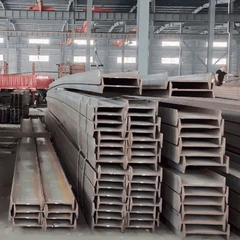


Industrial H-steel differs from residential in three ways: -industrial use large sections (H300×150 to H800×300) and high-grade steel (Q460/S460) for heavy loads (e.g., 10+ kN/m² in factories); residential uses small sections (H150×75 to H250×125) and low-grade (Q235/Q355) for lighter loads. -industrial H-steel (e.g., chemical plants) needs anti-corrosion coatings (epoxy + zinc) to resist chemicals; residential uses basic paint or no coating (indoor use). -industrial beams often have custom holes for machinery mounting; residential beams use standard holes for simple connections. For example, a factory crane runway uses H600×200×12×20 (Q460), while a residential floor uses H200×100×5.5×8 (Q355).

What performance adjustments are needed for H-steel in cold climates?
In cold climates (e.g., Siberia, Canada), H-steel needs two key adjustments: -use low-temperature-resistant grades like Q355D (tested at -40℃) or S355JO (EN standard), which retain ductility to avoid brittle fracture (common in cold with low-grade steel). -cold, wet conditions accelerate rust; apply thick epoxy coatings (150-200μm) or hot-dip galvanizing (100μm+ zinc layer) to prevent corrosion. For extreme cold (-50℃+), add thermal insulation (mineral wool) around beams to avoid condensation (which causes freezing damage). These adjustments ensure H-steel maintains 90%+ of its load capacity in sub-zero temperatures, critical for cold-region infrastructure.
Are H-steel beams used in cultural heritage building renovations?
Yes, H-steel is ideal for heritage renovations due to its : It can support aging structures (e.g., stone walls, wooden roofs) without requiring large, aesthetically disruptive supports. For example, in restoring European cathedrals, slim H-sections (H120×60×5×6) are hidden within walls or roof trusses to reinforce load-bearing points while preserving historical appearance. In Asian heritage sites (e.g., Chinese temples), corrosion-resistant H-steel (Q355NH) replaces rotted wooden beams, matching the original structure's span without altering design. Unlike concrete, H-steel's lightweight nature avoids adding extra load to fragile heritage foundations, making it a top choice for conservation projects.

Which Central Asian countries are increasing H-steel usage?
-for Astana's new government buildings and oil refinery expansions, importing H-steel from Russia and China. -Tashkent's urban renewal (replacing old mud-brick homes with mid-rises) and Samarkand's tourism infrastructure (hotel renovations) drive demand. -Ashgabat's residential construction and natural gas facility upgrades rely on H-steel for structural frames. These countries prioritize cost-effectiveness and fast construction-H-steel's standardized sizes and easy fabrication fit their needs. Most H-steel is imported due to limited local production, with China accounting for 60% of imports (via the Belt and Road Initiative).
How does H-steel's stiffness affect its use in high-rise buildings?
Stiffness (measured by flexural rigidity EI) is critical for H-steel in high-rises: Tall buildings (20+ floors) need stiff beams to resist wind-induced sway (max 1/500 of building height) and reduce vibration (for occupant comfort). H-steel's I-shape maximizes EI-large sections like H500×200×10×16 have high stiffness, minimizing sway in 30-floor buildings. Stiffness also prevents floor deflection (max 1/360 of span) under live loads. For example, a 10m span H500×200 beam deflects only 28mm under 5 kN/m² load, meeting comfort standards. Engineers pair stiff H-steel beams with rigid columns to form a stable frame-without sufficient stiffness, high-rises risk structural damage or occupant discomfort.
